
The Difference Between Shuttle Kilns and Tunnel Kilns and Their Impact on Ceramic Forming
October 19, 2023
The Difference Between Shuttle Kilns and Tunnel Kilns and Their Impact on Ceramic Forming
n a ceramic factory, shuttle kilns and tunnel kilns are like two pieces of kilning equipment with totally different personalities—one is flexible and adaptable, while the other is single-minded and highly efficient. Picking the right kiln can directly double your yield rate and profit margin. Let’s break down their differences in plain English, along with their actual impacts on ceramic forming during production.
I. What’s the Real Difference Between Shuttle Kilns and Tunnel Kilns?
1. Production Mode: One is a “Flexible Solo Player”, the Other is a “Mass-Production Powerhouse”
• Shuttle Kiln: It’s a typical batch-type machine. The kiln car slides into the kiln for firing just like a shuttle in a loom; once firing is done, it slides back out to unload the finished products. Each firing batch has to go through a full cycle of heating, heat preservation, and cooling, and you can tweak the temperature and atmosphere anytime during the process.
For example, you can fire 50 hand-painted art vases today, then test-run 20 irregular ceramic ornaments tomorrow—just switch up the firing curve, and it’s a piece of cake.
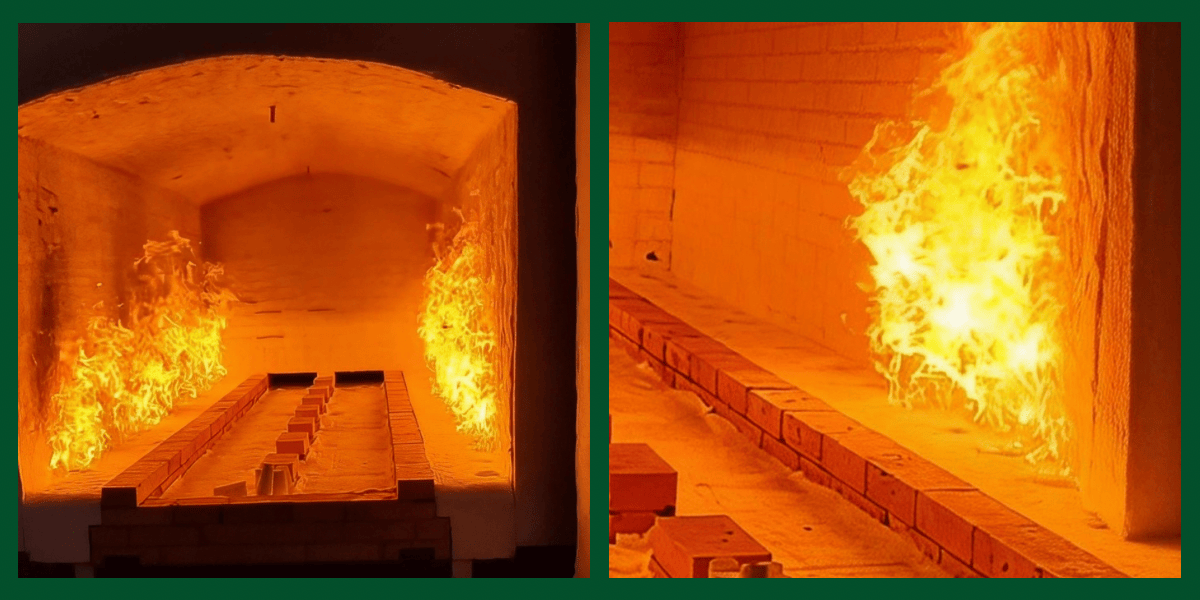
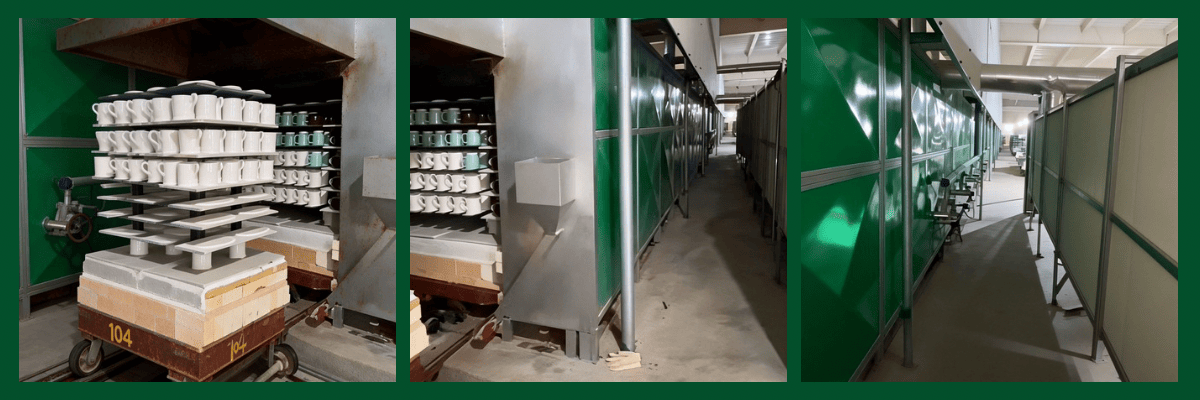
• Tunnel Kiln: It’s a total continuous-production workhorse. It’s a long tunnel where kiln cars queue up to move through it in sequence, passing through the preheating zone, firing zone, and cooling zone non-stop from start to finish.
Once you set the parameters, you can’t change them easily. It’s perfect for factories that need to churn out thousands of ceramic tiles or tens of thousands of rice bowls a day—it’s all about standardization and large-scale production.
2. Structure and Energy Consumption: One is “Sleek but Power-Hungry”, the Other is “Rugged but Energy-Efficient”
• Shuttle Kiln: The kiln body isn’t very big, mostly square or rectangular. It’s made of lightweight refractory materials and sealed up tight, so you can precisely control whether the inside is an oxidizing or reducing atmosphere.
But since it operates in batches, you have to heat up the kiln itself every time you start a new firing, which wastes a lot of residual heat. Traditional models are a bit of an energy drain. That said, newer versions come with waste heat recovery systems, which save a ton of electricity.
• Tunnel Kiln: The kiln body is long and massive, lined with refractory bricks, and clearly divided into three zones. It has a smart trick up its sleeve—it uses waste heat from the cooling zone to preheat the newly loaded greenware, making its heat utilization rate way higher than traditional shuttle kilns.
The downside is that its huge size means a large heat dissipation area. Plus, all those kiln cars absorb heat too, so its energy-saving performance falls a bit short of roller kilns—but it’s still way more cost-effective than shuttle kilns.
3. Process Parameters: One is “Slow and Steady for Quality Work”, the Other is “Fast and Furious for High Output”
• Shuttle Kiln: It takes several days to finish one firing batch. The temperature in the high-heat zone is super uniform—no hot or cold spots—and the temperature control accuracy can reach ±3℃, so it can handle even the most complex firing processes with ease.
• Tunnel Kiln: It’s insanely efficient. The greenware only needs to stay in the high-heat zone for a few hours to be fired properly. Its daily output can easily exceed 20 cubic meters, and the temperature system is rock-solid—it just has zero flexibility.
II. Tangible Impacts on Ceramic Forming
1. Shuttle Kiln: The “Custom Tailor” for Art Ceramics and Special Ceramics
• Advantages: Its precise temperature and atmosphere control ensures the greenware heats evenly, which drastically reduces the risk of deformation and cracking. For pieces like intricately shaped sculpture ceramics, variable-glaze kiln-transformation ceramics, or high-demand special industrial ceramics, firing them in a shuttle kiln guarantees top-notch quality.
What’s more, loading and unloading are done outside the kiln, so workers don’t have to toil away in high temperatures. You can also do naked firing, which gives the ceramics a more natural texture.
Take small workshops that make high-end tea sets, for example—they love using shuttle kilns. Each batch only has a few dozen sets, and every set has a slightly different glaze color, which actually becomes a unique selling point.
• Disadvantages: Low production efficiency is its Achilles’ heel—it can’t hold a candle to tunnel kilns when it comes to mass production. Besides, the thermal stress from heating and cooling cycles might cause invisible micro-cracks in thin-walled ceramics. Traditional models’ high energy consumption also drives up production costs. Occasionally, incomplete fuel combustion can leave tiny “fire marks” on the ceramic surface.
2. Tunnel Kiln: The “Mass-Production Assembly Line” for Daily-Use Ceramics and Building Ceramics
• Advantages: Continuous production ensures the greenware heats and cools smoothly, resulting in highly consistent finished products with an extremely low breakage rate.
For instance, tile factories use it to fire floor tiles—every single piece has the exact same flatness and glaze color. Tableware factories can produce tens of thousands of rice bowls a day, all with uniform specifications. What’s more, the slow moisture removal in the preheating zone prevents the greenware from cracking due to rapid water evaporation, and ceramics fired in a reducing atmosphere boast evenly colored glazes.
• Disadvantages: The fixed temperature gradient across its three zones makes it useless for irregular or thick-walled ceramics. It’s prone to leaving internal stress due to uneven heating, which makes the finished pieces easy to shatter if knocked. Want to fire kiln-transformation glazes or crystalline glazes that need special temperature control? Forget about it.
Also, the stacking density of the greenware is crucial. If the spacing is off, air circulation inside the kiln will be poor, leading to some pieces being over-fired while others are under-fired.
III. Practical Production Takeaway: Choose the Right Kiln for Prototyping vs. Mass Production
In actual ceramic production processes, shuttle kilns and tunnel kilns often work hand in hand.
When we’re prototyping to test the printing effect of decal paper, we always go for shuttle kilns first. After all, the prototyping phase requires testing the color development of different decal papers and their compatibility with glazes. Batches are small, and there are lots of adjustments to be made. Shuttle kilns let you flexibly modify the temperature control curve, so the fired samples can accurately reflect how the products will turn out during mass production—saving you from costly large-scale failures.
Once the decal paper effect is finalized and we move into large-scale mass production, it’s tunnel kilns’ time to shine. Whether it’s tableware and tea sets printed with the same decal paper, or floor tiles with a uniform color scheme, tunnel kilns can churn out standardized products steadily, with minimal breakage, keeping production costs as low as possible.
Simply put, shuttle kilns are for “trial runs and finalization”, while tunnel kilns are for “mass production and profit-making”. When used together, they strike the perfect balance between ceramic product quality and production efficiency.